

Fall is here, and October is shaping up to be an exciting month at the Bandera Natural History and Art Museum. With new programs beginning, community events on the calendar, monarch migration season approaching, and plenty happening around the museum, there are lots of reasons to visit this month.
We’ll be at the Bandera County Fair, October 8–10, where we’ll have a free activity for the kids. Be sure to stop by and say hello if you’re attending the fair!
We’re also excited to begin our new Art Appreciation series on October 15. These programs will combine art discussions with fun, hands-on activities and are designed to give our visitors new ways to explore and enjoy art at the museum. Most Art Appreciation programs are included with regular museum admission, which means they are FREE for museum members.
One of the special programs in the new series will be a Mini Master Class with artist Melissa Sutherland. On Oct 24th, Melissa will lead guests through a Talavera-inspired Gecko painting in celebration of Hispanic Heritage Month. This class has limited attendance, requires advance registration and has an additional cost, so be sure to reserve your spot if you’d like to participate.
Monarch season is also approaching! Mid-October should be the prime viewing for the butterflies stopping by our museum. Keep an eye on the skies and gardens as these beautiful travelers make their annual migration through the Texas Hill Country on their way south to Mexico.
Finally, with the holiday season quickly approaching, our Gift Shop has recently been restocked with plenty of new items. Whether you’re looking for an early Christmas gift, something for the kids or grandkids, or a unique museum souvenir, be sure to take a look during your next visit.
There’s a lot happening at the museum this fall, and we hope to see you soon!
Simon D’Urso
Director
.png)
Date Night at the Museum
Our recent Date Night at the Museum was a tremendous success, with more than 100 guests joining us for an evening of great food, music, laughter, and time together at the museum. We were thrilled with the turnout and are grateful to everyone who came out and helped make the evening so memorable.
Events like this simply wouldn’t be possible without the people who give their time to make them happen. A huge thank you to all of our volunteers who helped with setup, prepared and served the delicious food, and kept everything running smoothly throughout the evening. And to the Texas Salt Company, thank you so much for sponsoring this event with your gifts to our Silent Auction, support from local business are a vital part of our success.
I’d also like to give a special thank you to my mother, Liz D’Urso, for providing the wonderful piano music that helped set the tone for the evening, and to Tim Palmer for wrapping things up with a hilarious comedy show. Thank you to everyone who played a part in making our Date Night such a success!


Upcoming Events
Now through Oct 31st - 20% off Annual Memberships

Art Appreciation Classes


Monarch Migration Season
We are predicting Oct 12 - 18 to be the peak activity for Monarchs here at the museum. We greatly appreciate all our master naturalists and volunteers who work hard to maintain our gardens. Also a special thank you this month to Boyle's Hardware for their donation of mulch.


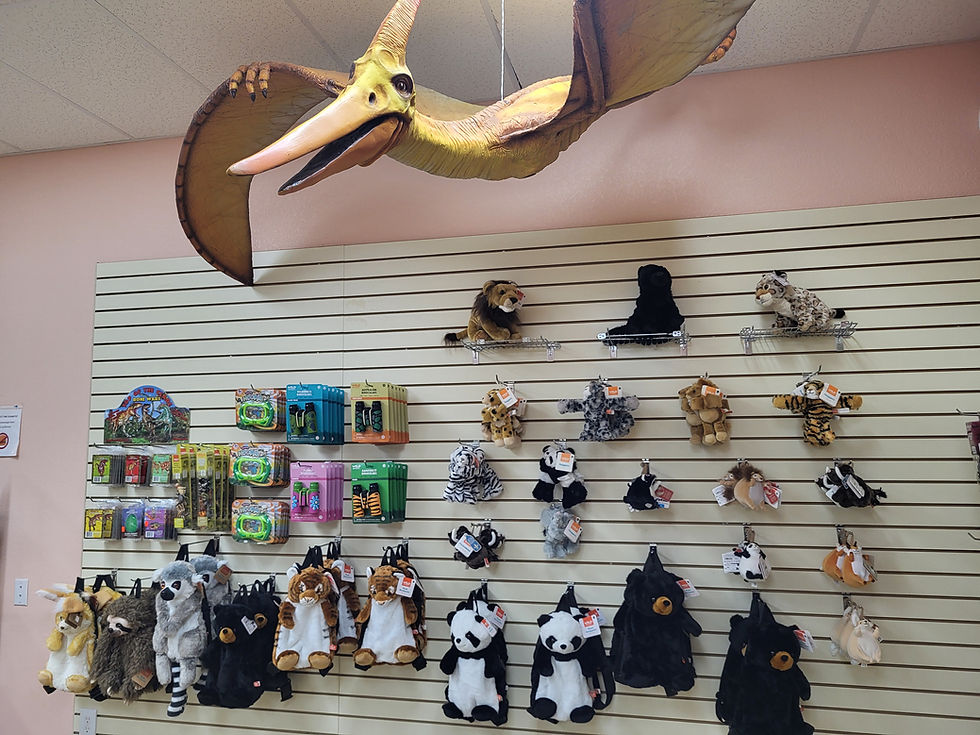

We have recently restocked our Gift Shop and have some amazing items for sale including new items in our Estate Jewelry case. The Fahlo brand bracelets and animal plushes are great gifts as they include the ability to track a real animal in the wild. Don't forget members get 20% discount on most items!
Museum Gift Shop


Featured Exhibits
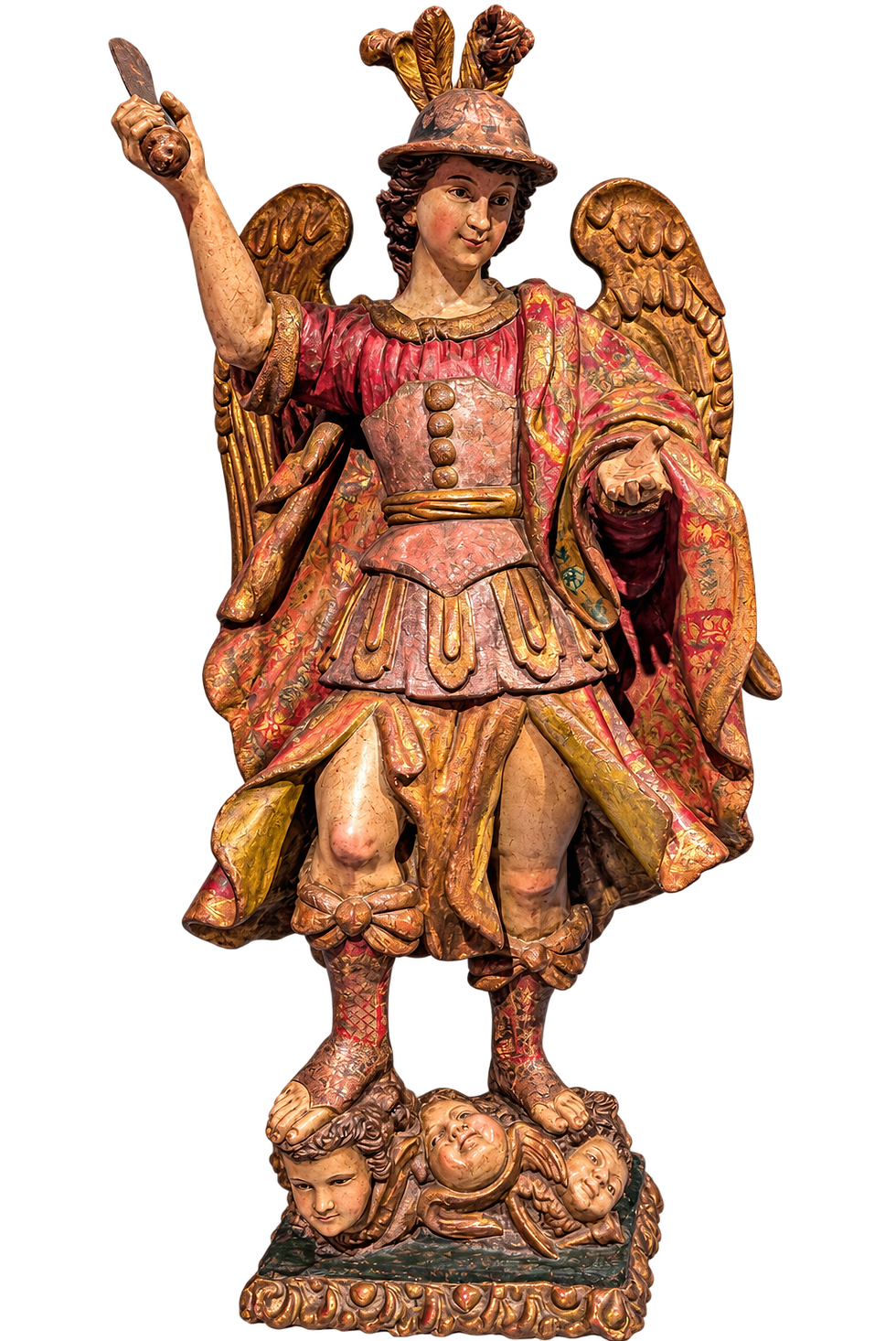
Archangel Michael
Estofado, Gilded, and Polychromed Wood
This early 18th-century sculpture depicts "the Archangel Michael," a prominent spiritual figure whose sanctuaries first appeared in the 4th century. Originally revered as a healing angel, Michael's importance grew over time as he came to be recognized as a protector and the supreme leader of God's army in the fight against the forces of evil.
The physical piece is carved from wood and finished using gilding and polychrome painting techniques. Its detailed surface features estofado, an artistic method where paint is applied over gold leaf and selectively scratched away to expose the metallic layer beneath, creating intricate, textured patterns.
This unique piece required intense technical skill to sculpt fluid curves, delicate armor, and floating drapery out of rigid wood. The carved cherub heads beneath Michael's feet combined with the intricate estofado gilding makes the artwork stands out as a blend of fine craftsmanship and religious symbolism.
Location
New Spain Art Hall
Makonde Art

Becka Lyamba
African Blackwood
Southern Tanzania
One of the more unusual pieces in our collection comes from the Makonde people of Tanzania, who are internationally renowned for their intricate woodcarving traditions. This sculpture is an example of the Shetani style, named for supernatural beings or spirits found in East African folklore.
Shetani sculptures are often immediately recognizable by their exaggerated faces, distorted bodies, unusual combinations of human and animal features, and smaller figures incorporated into the larger carving.
Our sculpture has been interpreted as a humorous reflection on the effects of aging. The small spirit-like figures represent the troubles that gradually inhabit the body as we grow older, affecting our eyes, knees, shoulders and hips until, eventually, we may even need help standing upright. Rather than simply depicting aging realistically, the artist transforms a universal human experience into a fantastic collection of mischievous beings.
Modern Shetani sculpture developed among Makonde artists in Tanzania during the mid-20th century, combining older traditions and stories about the spirit world with the creativity of individual artists. Makonde carvers became famous for turning dense, dark hardwood into remarkably complex sculptures filled with intertwined figures and open spaces. Take a closer look at this piece on your next visit, you may discover another face or figure you didn't notice the first time!
Location
International Hall

Xoloitzcuintli
Mexico
Beads, wax, resin
Xoloitzcuintli (pronounced show-low-eats-queent-lee) immediately commands attention as one of the highlights in our new art wing, but step closer and the true craftsmanship of this remarkable Mexican sculpture begins to reveal itself.
The sculpture connects contemporary Mexican artistry with a cultural history stretching back thousands of years. The name comes from the Nahuatl Xólotl, a deity associated with death, lightning, and the underworld and itzcuintli, meaning “dog". Featured in the 2017 Pixar film "Coco", these remarkable animals are traditionally associated with companionship, protection and guiding souls on their journey to the afterlife.
The sculpture's surface is covered with hundreds of thousands of tiny glass beads, or chaquira, painstakingly arranged into elaborate geometric designs. Traditional Wixárika beadwork uses a mixture of wax and resin to create an adhesive surface, allowing artists to press the tiny beads into place and gradually build their intricate patterns.
We were told that two women worked for approximately eight months to complete Xoloitzcuintli.
Location
Art Educational Center
SUPPORT THE MUSEUM
Help Preserve our Shared History and Culture
Memberships, sponsorships, and donations directly support exhibits, educational programs, preservation, and community engagement.
Call us at (830) 328-5090 if you are interested in:
-
Visiting the museum with a group of 10 or more
-
Hosting a Birthday Party at the Museum
-
Venue Rental - Rent out the International Hall, New Spain Art Hall, or our Outdoor spaces for your next big event
Also call us at (830) 328-5090 if interested in leaving a lasting impact in the community by joining our list of museum sponsors:
